Metal Roof Coating
Restore a sound metal roof by addressing seams, fasteners, corrosion and the existing finish before applying a compatible coating.
Explore Metal Roof Coating
We serve Fort Valley with commercial roof coating and restoration planned for your roof and local conditions. We’ll assess worn surfaces, review repair needs and coordinate the application window so you know what to expect from your project.
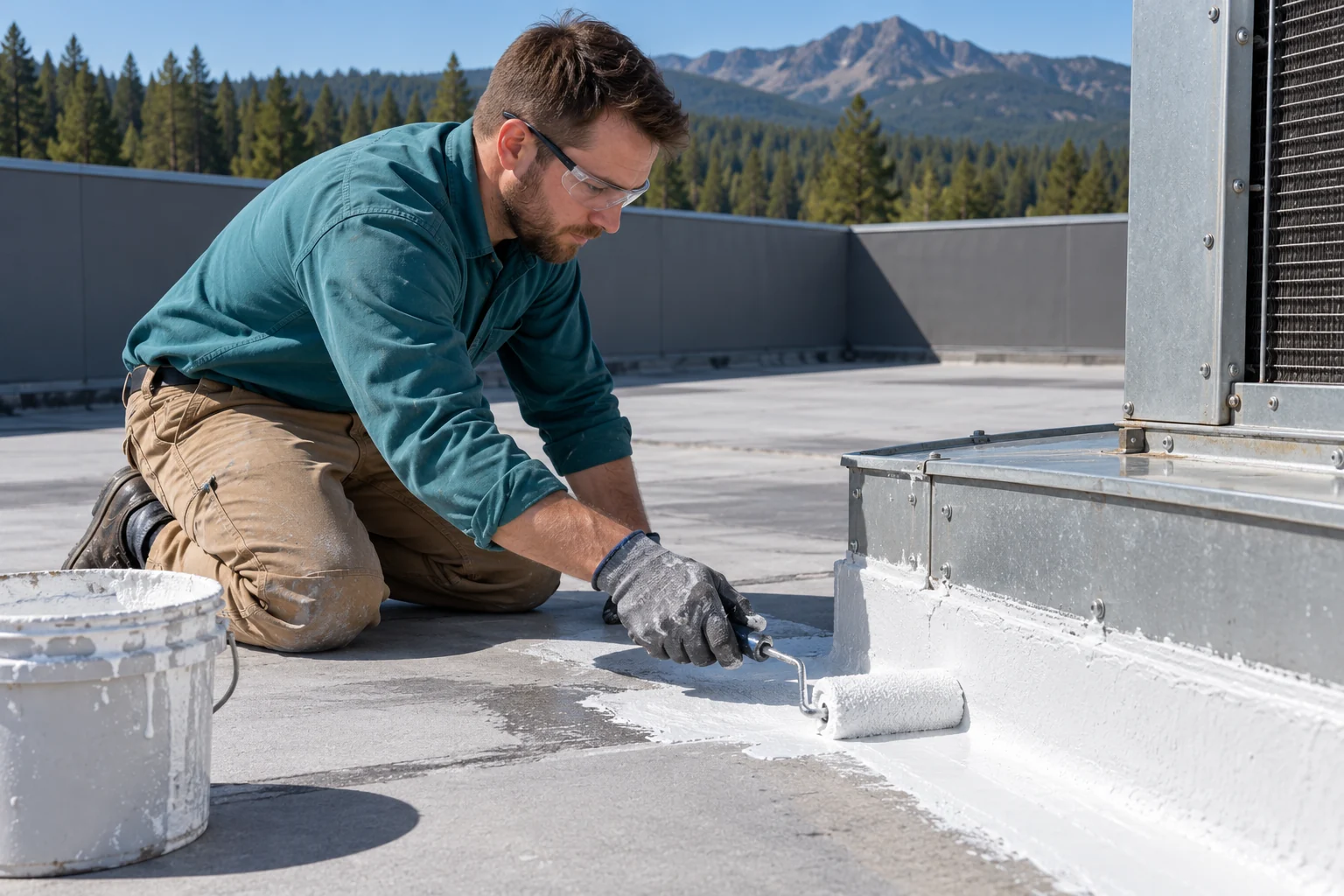
Flagstaff-area weather includes winter conditions and seasonal thunderstorms. For a Fort Valley property, the relevant check is the condition at the roof during each stage of work. Air temperature can differ from the surface being coated, and later rain or condensation can affect the plan.
Ask which product is specified and how we check its requirements. The answer should distinguish cleaning, primer, detail repairs and finish application instead of treating the project as one uninterrupted activity.
The Flagstaff acrylic roof coating guide explains why water-based coatings need the manufacturer’s stated drying conditions. The Flagstaff silicone roof coating guide addresses compatibility and surface-condition requirements. Neither material name makes every forecast acceptable.
A cured coating’s performance is a separate question from installation limits. Ask for both to be explained. Avoid claims that “cold-weather rated” or “quick set” means work can proceed on wet or otherwise unsuitable surfaces.
Restore a sound metal roof by addressing seams, fasteners, corrosion and the existing finish before applying a compatible coating.
Explore Metal Roof CoatingRenew protection on a compatible roof. Check adhesion, moisture and drainage before selecting the silicone system.
Explore Silicone Roof CoatingConsider an acrylic finish where the roof drains properly and the required application and drying conditions can be met.
Explore Acrylic Roof CoatingAdd or repair a foam roof assembly, or renew the protective finish on existing foam. Separate insulation work from coating-only work.
Explore Spray Foam RoofingConfirm the roof sections, material, repair history and access arrangements. Surface conditions and overnight weather help determine the application schedule.
Define repairs and any moisture, drainage or compatibility checks before selecting the finish.
Agree on materials, quantities, access, weather limits and how additional work will be approved.
Retain the repair map, product details, completion photos and maintenance instructions.
Who checks the forecast and roof conditions before application.
Which stages can proceed and which must wait.
How unfinished work and material storage are managed.
How the owner is notified of a revised sequence or access restriction.
Identify the correct building entrance, roof access contact and any tenant notice requirements. Share available roof drawings or invoices and describe when leaks appear. You do not need to climb onto the roof or choose a coating before the assessment.
Use the building address to establish access, any applicable local review and project arrangements. Follow the roof assessment and coating process to turn inspection findings into a scope that can be scheduled realistically.
For an early budget, the ballpark calculator uses fixed area-based assumptions. A final price needs the measured roof and an agreed scope.
Only if the exact system’s installation requirements can be met. Check air and surface conditions, moisture and the required curing window. We will explain the selected product’s limits and the plan if conditions change.
No. The required drying period and later conditions also matter. Ask how overnight cold, dew and forecast precipitation are considered for the selected product. An afternoon temperature reading alone is incomplete.
Some products have different application limits, but that is a product-specific comparison. Silicone still needs suitable preparation and surface conditions. Compare actual instructions rather than assuming a chemistry removes weather constraints.
The work plan should explain communication, site protection and how the sequence will change. Ask which areas will remain restricted and whether any completed preparation needs rechecking before application resumes.
Talk to us about the leak before waiting for a coating project. We can discuss whether targeted repairs need attention first and how a broader restoration can be planned around a suitable weather window.
Benefits Of Coating Your Roof
A coating can be a practical alternative to full replacement when your Fort Valley roof is sound and suitable for restoration. An inspection helps establish which of these benefits fits your property.
On a suitable roof, coating can reduce the labor, new materials and disposal costs of a full replacement. Compare complete scopes after inspection to understand your potential savings.
A coating project can often be planned around an occupied building. Coordinate entrances, air intakes and work areas with the crew to limit disruption and confirm any temporary restrictions.
Keep sound roofing in service instead of sending the entire assembly to landfill. Repair or remove damaged and wet areas first, then restore the portions that qualify for coating.
A compatible coating system may be renewed when it wears, provided the roof remains sound. Regular inspections and timely repairs help determine when another coat is the right next step.
See a starting budget for your commercial roof, then let’s turn your next step into a clear plan. Request your free inspection and talk through the options with us.
Get A Free Instant Ballpark Estimate