Before Work Begins
Confirm roof sections, access, occupied areas, selected materials and the weather requirements. Agree on notification responsibilities and the limits of the approved scope.
We guide your roof project from the first conversation to the final walkthrough. Here’s how we assess your roof, explain your options, prepare the surface and carry out the work around your building’s needs.
Record the roof sections, approximate area, access contact and main concern. Bring available repair records and leak observations.
Document the material, details, drainage and condition. Explain any need for further moisture or assembly investigation.
If a suitable base can be retained, define the restoration scope. If findings do not support coating, explain the alternative and what additional information is needed.
Name materials, repair quantities, preparation, required thickness and access arrangements. Clarify exclusions and who handles required approvals.
Complete specified corrective work and surface preparation. Follow the selected manufacturer’s application requirements and record required checks.
Collect the repair map, installed materials, completion evidence and maintenance/warranty instructions. Agree on how concerns will be reported.
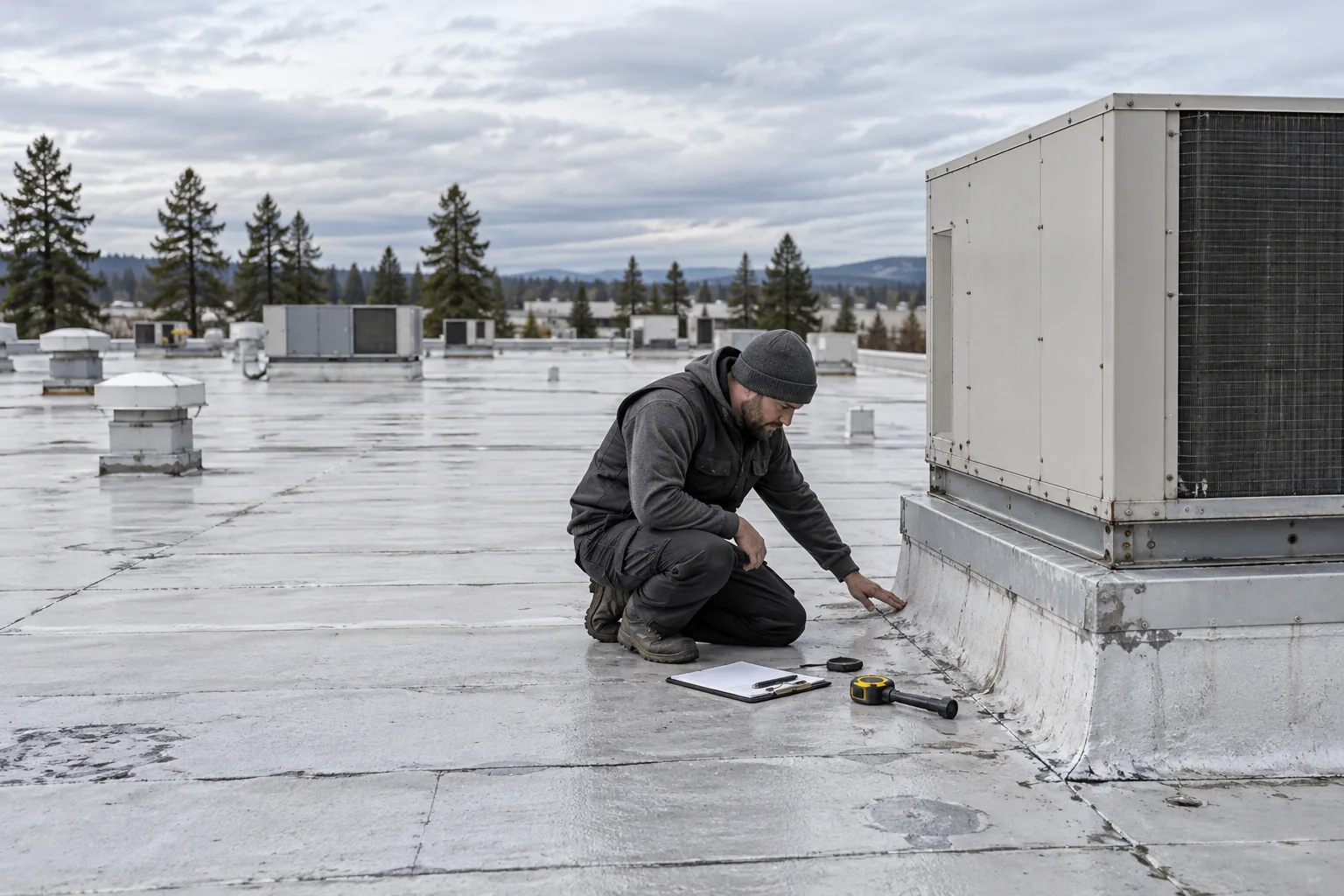
The report should connect each recommendation to an observed condition. Request marked photographs, roof-section labels and a clear distinction between confirmed findings and items that need further investigation. We’ll connect the photographs to specific roof details and repair needs.
Ask how suspected moisture will be assessed and what the result changes. Do not assume a visual walkthrough, infrared scan, adhesion check or sample answers every question; the method must fit the condition being investigated.
| Finding | Next Decision |
|---|---|
| Localized Defect With Otherwise Serviceable Roofing | Evaluate a targeted repair and whether broader coating has a defined purpose. |
| Compatible, Serviceable Roof With Worn Protection | Compare a specified restoration system after the necessary repairs. |
| Suspected Moisture Or Unknown Assembly | Investigate before deciding which materials can remain. |
| Extensive Deterioration Or Compromised Materials | Compare more substantial repair or replacement instead of assuming coating will solve it. |
Confirm roof sections, access, occupied areas, selected materials and the weather requirements. Agree on notification responsibilities and the limits of the approved scope.
Unexpected conditions can alter the scope. Agree in advance on how we will document the finding, explain the proposed response and obtain approval for added work. Keep revisions with the original proposal so the final record shows what changed and why.
Use our service pages for system-specific questions. The ballpark estimate calculator helps with preliminary planning, but the inspected scope is what makes contractor estimates comparable.
Collect the repair map, installed product names, completion photos and required inspection records. Keep the maintenance instructions and actual warranty documents with the property’s roof history.
The existing roof, drainage, details and condition should be assessed. We will explain repair needs, suitability and any unresolved investigation. The recommendation should follow those findings rather than begin with a preferred product.
No single method fits every assembly or concern. Ask why a method is appropriate, what it can establish and how findings will affect retained materials. Suspected trapped moisture should not be dismissed because the surface looks dry.
Dry film thickness is the thickness of the coating after it has dried or cured. It differs from the wet layer during application. The proposal should state the system’s requirement and how application quality will be checked.
We will document the condition and explain the proposed change in scope, price and schedule before the added work is approved. Agree on this process in the written project terms.
Request the installed product names, roof areas, repair locations, completion photos, applicable inspection records and maintenance and warranty documents. These records support future repairs and help establish what work was actually performed.
Benefits Of Coating Your Roof
A coating can be a practical alternative to full replacement when your Flagstaff roof is sound and suitable for restoration. An inspection helps establish which of these benefits fits your property.
On a suitable roof, coating can reduce the labor, new materials and disposal costs of a full replacement. Compare complete scopes after inspection to understand your potential savings.
A coating project can often be planned around an occupied building. Coordinate entrances, air intakes and work areas with the crew to limit disruption and confirm any temporary restrictions.
Keep sound roofing in service instead of sending the entire assembly to landfill. Repair or remove damaged and wet areas first, then restore the portions that qualify for coating.
A compatible coating system may be renewed when it wears, provided the roof remains sound. Regular inspections and timely repairs help determine when another coat is the right next step.
See a starting budget for your commercial roof, then let’s turn your next step into a clear plan. Request your free inspection and talk through the options with us.
Get A Free Instant Ballpark Estimate