New Foam
A designed SPF assembly includes substrate work, specified foam thickness, drainage, details and a compatible protective finish. Price the whole assembly.
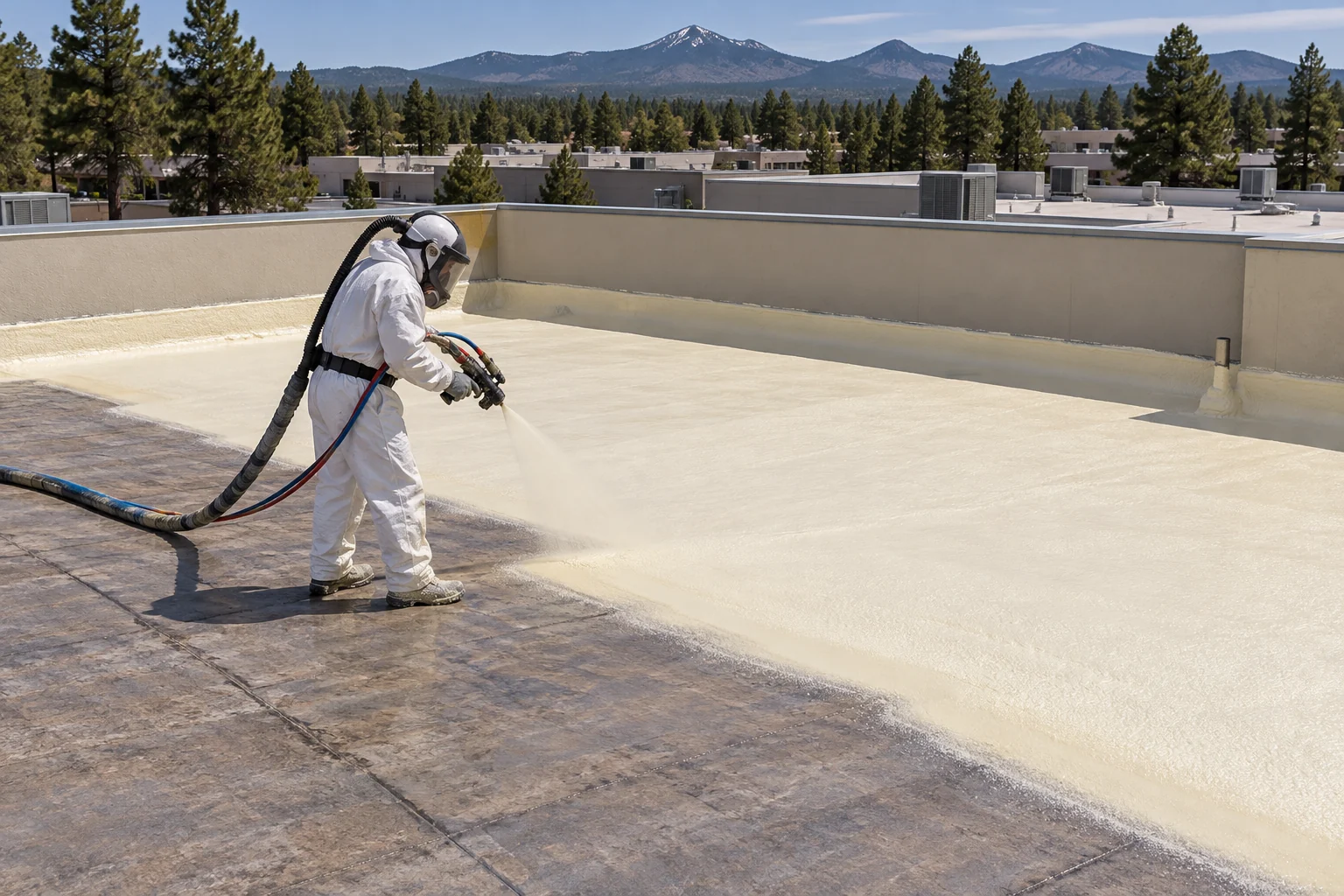
Bring insulation and roof protection into one planned system. We offer Flagstaff spray foam roofing, foam roof repairs and protective recoating for commercial properties. Talk to us about a new foam roof or caring for the system already on your building.
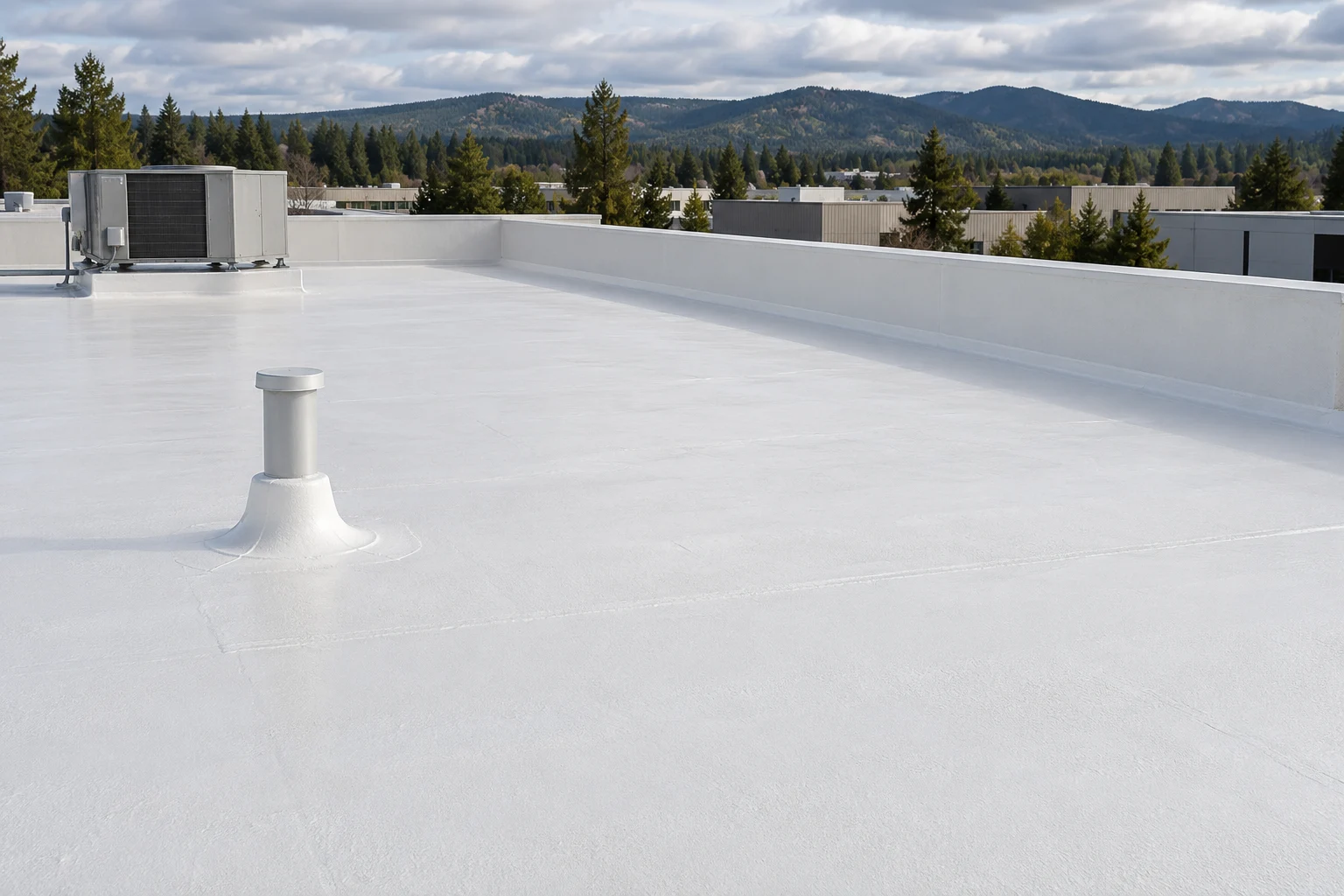
The roof beneath the foam, the foam itself and its protective finish all matter. A new assembly needs a defined substrate, foam specification and thickness, drainage approach, roof details and coating system. A product name alone does not describe the design.
For an existing foam roof, ask what the inspection found beneath worn or damaged coating. The proposal should identify sound areas to retain, damaged areas to repair and any moisture-related removal. A recoat should not hide a problem that needs corrective work.
A designed SPF assembly includes substrate work, specified foam thickness, drainage, details and a compatible protective finish. Price the whole assembly.
Define damaged areas, removal boundaries and compatible repairs. Explain how repaired areas tie into the sound roof that remains.
Renew the finish after evaluating the retained foam and completing repairs. A recoat allowance does not include installing a new foam roof.
Document existing roofing and determine what can remain. Resolve suspected moisture or damage before specifying new work.
State whether the project adds insulation, restores protection or addresses localized damage. Do not imply one scope includes all three.
Coordinate roof access, air intakes, adjacent work, vehicles and nearby properties with the installer’s application plan.
Keep the foam/coating specifications, repair map, completion records and maintenance requirements together.
Plan the roof work around the people using the building. Identify public entrances, delivery routes, parking areas and rooftop air intakes before scheduling. Spray application needs controls matched to the products, the site and nearby activities.
Agree on containment, ventilation, temporary access restrictions and any tenant notices with the installer. Re-entry arrangements should follow the product guidance and site plan. Confirm who will communicate changes if weather or operating needs affect the schedule.
Name a building contact who can coordinate with the crew and approve access changes. Keep maintenance teams informed about restricted roof areas and equipment-service routes. A shared daily plan helps everyone understand where work is happening and when normal access can resume. Confirm who will handle access questions after the crew leaves.
If added insulation is a project goal, ask for the proposed foam thickness and supporting thermal-performance information. Any energy-savings estimate should reflect your building’s insulation, heating, cooling and operating patterns. A reflective finish alone does not establish a specific reduction in utility costs.
Separate new foam, localized repairs and protective recoating in the proposal. Our ballpark estimate calculator compares generic coating and replacement budgets; it does not price a new SPF assembly. For an existing foam roof, review compatible silicone and acrylic finish options after the assessment.
Keep the foam and coating specifications, thickness records and repair map with the building’s maintenance file. Arrange inspections according to the installed system’s requirements and address damage promptly. Clear records help future crews repair the roof without introducing incompatible materials.
No. SPF is the foam layer in a roofing assembly. Silicone is one chemistry that may be used for its protective finish. Installing foam, repairing foam and recoating the surface are distinct tasks that should be separated in a proposal.
Possibly, if the existing foam and assembly are suitable to retain. Inspect coating wear, damaged areas, moisture and drainage first. The proposal should identify repairs and explain why the remaining foam is a suitable base.
Yes. Talk to us about the existing roof and your insulation goals. We’ll assess the project and prepare a scope for the foam assembly and protective coating. New foam installation is priced separately from a coating-only recoat.
That requires a site-specific plan. Coordinate application areas, building air intakes, ventilation, neighboring activity and access restrictions with the installer. Follow product and safety requirements; do not rely on a blanket assurance that operations will be unaffected.
Damaged or wet areas need assessment and an appropriate repair or removal scope. The new protective finish should follow that work. Ask us to explain which foam is being retained and how defects will be corrected.
That depends on the specified foam product, installed thickness and roof assembly. Request the design and supporting thermal data. Avoid accepting a generic R-value or savings percentage without knowing what is actually being installed.
Follow the installed system’s maintenance requirements and document changing conditions. Coating wear, damage and drainage problems need assessment. The recoat decision should follow condition and compatibility findings rather than a universal age rule.
Benefits Of Coating Your Roof
These benefits apply to restoring a suitable existing foam roof with a protective coating. New foam installation is a separate scope; wet or damaged foam needs attention before recoating.
On a suitable roof, coating can reduce the labor, new materials and disposal costs of a full replacement. Compare complete scopes after inspection to understand your potential savings.
A coating project can often be planned around an occupied building. Coordinate entrances, air intakes and work areas with the crew to limit disruption and confirm any temporary restrictions.
Keep sound roofing in service instead of sending the entire assembly to landfill. Repair or remove damaged and wet areas first, then restore the portions that qualify for coating.
A compatible coating system may be renewed when it wears, provided the roof remains sound. Regular inspections and timely repairs help determine when another coat is the right next step.
See a starting budget for your commercial roof, then let’s turn your next step into a clear plan. Request your free inspection and talk through the options with us.
Get A Free Instant Ballpark Estimate